Queer Places:
University of Illinois Urbana-Champaign, Champaign, IL, United States
École des Beaux-Arts, 14 Rue Bonaparte, 75006 Paris
Midway Studio, 6016 S Ingleside Ave, Chicago, IL 60637, USA
University of Chicago, 5801 S Ellis Ave, Chicago, IL 60637, United States
University of Illinois, 1200 W Harrison St, Chicago, IL 60607, United States
Elmwood Township Cemetery, Elmwood, IL 61529, United States
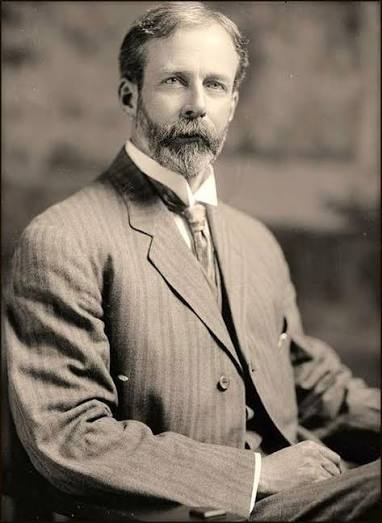 Lorado Zadoc Taft (April 29, 1860 - October 30, 1936) was a prominent American sculptor, author, and educator who shaped the Chicago cultural and artistic landscape for nearly
five decades. After receiving his early education at the University of Illinois in Urbana, he pursued intensive artistic training in Paris at the École des Beaux-Arts. Upon
returning to the United States, Taft settled in Chicago, where he opened a studio and began teaching at the Art Institute of Chicago in 1886. His career reached a major
milestone when he secured the assignment to design sculptures for the Horticultural Building at the 1893 World's Columbian Exposition, a project where he notably employed
and advocated for a talented group of female assistants known as the "White Rabbits".
Lorado Zadoc Taft (April 29, 1860 - October 30, 1936) was a prominent American sculptor, author, and educator who shaped the Chicago cultural and artistic landscape for nearly
five decades. After receiving his early education at the University of Illinois in Urbana, he pursued intensive artistic training in Paris at the École des Beaux-Arts. Upon
returning to the United States, Taft settled in Chicago, where he opened a studio and began teaching at the Art Institute of Chicago in 1886. His career reached a major
milestone when he secured the assignment to design sculptures for the Horticultural Building at the 1893 World's Columbian Exposition, a project where he notably employed
and advocated for a talented group of female assistants known as the "White Rabbits".
Over his lifetime, Taft completed numerous large-scale civic monuments and public art installations, including the Blackhawk statue in Oregon, Illinois, the Columbus
Fountain in Washington, D.C., the Fountain of the Great Lakes and the Fountain of Time in Chicago, and Alma Mater in Urbana. Deeply invested in civic beautification and art
education, he also shared his knowledge as a lecturer at the University of Chicago and a professor at the University of Illinois, while penning influential texts such as The
History of American Sculpture in 1903.
As an active and central figure in Chicago's vibrant cultural community, Taft participated in prominent local arts organizations and studio groups. Among these was the
Little Room, a mixed-gender social club fostered by novelists Hamlin Garland and
Henry Blake Fuller that met on Friday afternoons and occasional evenings in the top-floor penthouse studios of the Fine Arts
Building. The club brought together a diverse community of painters, writers, and other creatives, including founding members like
J.C. Leyendecker and his brother Frank Xavier Leyendecker, alongside other
notable cultural figures such as George Ade, Jane Addams,
Harriet Monroe, and Lorado Taft himself.
References:
- University of Illinois Archives (Urbana-Champaign): Houses the comprehensive Lorado Taft Papers (1857–1953), which include diaries, extensive general and family correspondence, lecture notes, photographs of sculptures and construction models, and records concerning the École des Beaux-Arts and his publications.
- Smithsonian Archives of American Art: Holds documentation, correspondence, and professional records related to Taft's career as a sculptor and educator.
- Chicago History Museum (Research Center): Maintains Taft's correspondence files—notably letters from prominent literary and artistic figures such as Henry Blake Fuller—alongside related documentation within the Senator Paul H. Douglas Papers (reflecting family ties via his daughter Emily Taft Douglas).
- Art Institute of Chicago (Ryerson and Burnham Libraries): Preserves smaller collections of Taft's professional papers and documentation concerning his tenure and instruction at the Art Institute.
- Northern Illinois University (Special Collections and Archives): Holds the Lorado Taft Field Campus records, documenting the history of the Eagle's Nest Art Colony in Oregon, Illinois, where Taft and fellow artists lived and worked.
- Garvey, Timothy J. (1988). Public Sculptor: Lorado Taft and the Beautification of Chicago. Urbana, Illinois: University of Illinois Press.
- Taft, Ada Bartlett (1946). Lorado Taft: Sculptor and Citizen. Chicago: Privately printed.
- Weller, Allen Stuart (1985). Lorado in Paris: The Letters of Lorado Taft 1880–1885. Urbana, Illinois: University of Illinois Press.
- Bach, Ira, and Mary Lackritz Gray (1983). Chicago's Public Sculpture. Chicago: University of Chicago Press.
- Craven, Wayne (1968). Sculpture in America. New York: Thomas Y. Crowell Co.
- Rubenstein, Charlotte Streifer (1990). American Women Sculptors. Boston: G.K. Hall & Co (featuring extensive coverage of Taft's studio assistants, the "White Rabbits").
- Taft, Lorado (1903). The History of American Sculpture. New York: The Macmillan Company.
- Taft, Lorado (1921). Modern Tendencies in Sculpture. Chicago: University of Chicago Press.
- Taft, Lorado (1927). The Appreciation of Sculpture. Chicago: American Library Association.
Support this project
This website is a passion project researched, developed, and funded entirely by me. If you find the content valuable and would like to help support the ongoing research and hosting costs, any contribution is deeply appreciated.
Thank you for keeping this independent resource alive!
My books on Amazon: Elisa Rolle's books
BACK TO HOME PAGE